Gary Bryce Fogel (born 1968) is an American biologist and computer scientist. He is the Chief Executive Officer of Natural Selection, Inc. He is most known for his applications of computational intelligence and machine learning to bioinformatics, computational biology, and industrial optimization. == Education and Research == Fogel was born and raised in La Jolla, California, graduating from La Jolla High School. He received a B.A. in biology with a minor in earth sciences from the University of California, Santa Cruz in 1991 and a Ph.D. in biology from the University of California, Los Angeles in 1998. Fogel has published over 150 peer-reviewed publications in conferences and journals, 2 edited books, and 11 patents. As CEO of Natural Selection, Inc., his research focuses on the application of computational intelligence, machine learning, and predictive analytics in areas not limited to: Viral evolution, cellular differentiation, drug discovery, RNA structure, cis-regulatory elements, cancer, and evolutionary game theory as well as the development of evolutionary algorithms and other approaches. == Service == Between 2008–2018 Gary Fogel was editor-in-chief of the Elsevier journal BioSystems. He has served previously as an associate editor for IEEE Transactions on Artificial Intelligence, IEEE Computational Intelligence Magazine (2005–2010), IEEE Transactions on Evolutionary Computation (2001–2013), IEEE Transactions on Emerging Topics in Computational Intelligence (2016–2018), IEEE/ACM Transactions on Computational Biology and Bioinformatics (2004–2008), International Journal of Bioinformatics Research and Applications (2004–2007), International Journal of Data Mining and Bioinformatics (2005–2007), as a consulting editor for the Journal of Computational Intelligence in Bioinformatics (2006–2007), and as an editorial board member of Ecological Informatics (2005–2009) and BMC Big Data Analytics (2015–2020). Within the IEEE Computational Intelligence Society, Fogel founded the Bioinformatics and Bioengineering Technical Committee and established the IEEE Computational Intelligence in Bioinformatics and Computational Biology conference series, chairing the first two meetings in 2004 and 2005 in San Diego. He co-founded the IEEE Conference on Artificial Intelligence in 2023. Fogel served on the IEEE Computational Intelligence Society Administrative Committee (2004–2009, 2014–2022) and served as IEEE CIS Vice President of Conferences (2010–2013, 2019). == Teaching == Gary Fogel also serves as adjunct faculty at San Diego State University in the department of aerospace engineering as well as in the Computational Science Research Center. He has authored four books and numerous articles on the history of early aviation focusing on motorless flight. He is an associate fellow of the American Institute of Aeronautics and Astronautics and serves on the AIAA History Committee. == Awards == 2023 – Outstanding Contribution to Aerospace Education Award, AIAA San Diego Section 2022 – Elected Fellow of the Asia-Pacific Artificial Intelligence Association 2019 – Top 100 AI Leaders in Drug Discovery and Advanced Healthcare by Deep Knowledge Analytics 2019 – Outstanding Contribution to Aerospace Education Award, AIAA San Diego Section 2016 – Meritorious Service Award, IEEE Computational Intelligence Society 2016 – Outstanding Contribution to the Community Award, AIAA San Diego Section 2015 – Outstanding Enhancement of the Image of the Aerospace Profession Award, AIAA San Diego Section 2012 – Medal for Significant Achievement, San Diego Chapter of Sigma Xi 2012 – Fellow of the Institute of Electrical and Electronics Engineers for contributions to computational intelligence and its application to biology, chemistry, and medicine. == Aeromodeling == Gary Fogel has established national and world records for model aircraft. He helped establish the National Model Aviation Heritage program for the Academy of Model Aeronautics. He is a leader member, contest director, and fellow of the Academy of Model Aeronautics, and was inducted into the Academy of Model Aeronautics Hall of Fame in 2025.
Artificial intimacy
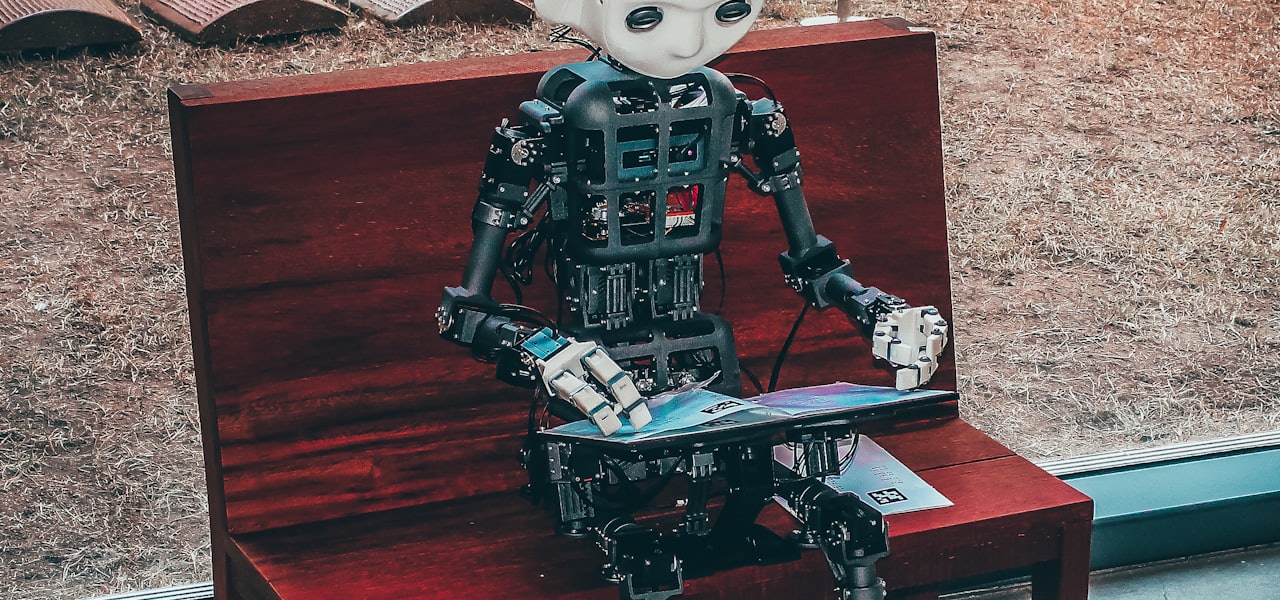
Artificial intimacy is a form of human-AI interaction in which an individual will form social connections, emotional bonds, or intimate relationships with various forms of artificial intelligence, including chatbots, virtual assistants, and other artificial entities. Artificially intimate relationships include not only romances, but parasocial relationships with virtual AI characters and the use of griefbots trained on a dead or otherwise lost individual. Artificial intimacy can arise because humans are prone to anthropomorphism. Responses from these AI models are often designed to simulate human interaction. Individuals experiencing artificial intimacy may exhibit attachment, love and commitment to certain AI models, akin to the bonds typically shared between humans. == Causes == === Perceived responsiveness === Robin Dunbar famously proposed that due to emergence of larger groups of humans, vocal communication and language in humans evolved to replace grooming as a means of bonding, arguing that language was a more efficient way to maintain and strengthen social bonds across wider social settings and networks. Further research in this field leads many psychologists to agree that social cognition, affiliative bonding and language in humans are deeply connected. The interpersonal model of intimacy considers communication to be key in affiliative bonding, suggesting that intimacy develops and deepens through open communication between partners in relationship. Specifically, when individuals communicate emotions and perceive their partner as responsive and caring, feelings of closeness and connection are enhanced, building intimacy. Social penetration theory also aligns with the idea of communication being central to intimacy, by explaining how interpersonal relationships develop through gradual increases in self-disclosure. When the benefits of emotional bonding outweigh the costs of vulnerability, individuals will partake in self-disclosure, opening up to one another. Thereby, the literature can be used to provide a proximate explanation for the emergence of artificial intimacy to understand how the phenomenon occurs. Artificial entities are able to mimic interpersonal communication between humans, which in turn can simulate sensations of intimacy within human users though a perceived sense of responsiveness. The relationship between human and AI does not come with the cost of vulnerability or social rejection, which may make self-disclosure easier than with other humans. Altogether, these factors may lead to the experience of anthropomorphism and formation of affiliative relationships. Skjuve et al's interview study on Replika chatbot users further aligns with this explanation, finding that users' perception of chatbots as "accepting, understanding and non-judgmental" facilitated relationship development between the AI and users, and the act of self-disclosure possibly strengthened relationships. Another study on Replika users' reviews and survey results found users perceived chatbots as emotional supportive companions. This evidence further suggests that the perception of artificial entities as capable of empathy and responsiveness in communication facilitate the development of intimate relationships between users and AI. === Loneliness and coping with negative emotions === Research has suggested that humans evolved social bonds as a result of evolutionary pressures that favored cooperation, information exchange and transmission, and group living. Many studies stress the presence of social bonds to be important for human living: research by Baumeister and Leary suggests that humans have a basic psychological need to form and maintain "strong, stable interpersonal relationships", and that a lack of social bonds or sense of belonging leads to negative psychological and physical outcomes. Eisenberger et al's study on the neuroimaging of brain activity suggests that human brains process social rejection and exclusion similarly to physical pain. Furthermore, Song et al's study found that lonely individuals tend to seek more connections in mediated environments, such as online platforms like Facebook. This was suggested to be as a means to reduce their offline loneliness from a lack of in-person interaction, while also fulfilling a need to communicate. Leading on from this, an ultimate explanation for why humans seek the perceived sense of connection from artificial intimacy is to fulfil an evolutionary need for bonding and belonging. Xie et al's study found loneliness to be a driving factor in chatbot interaction. Herbener and Damholdt's study on Danish high school students found that students who sought emotional support or engaged in reciprocal conversations with chatbots were significantly more lonely than their peers, perceived themselves as having less social support, and used the chatbots to cope with negative emotions. The aforementioned notion that chatbots were perceived to have a positive effect on users' negative emotions is also further supported by other studies. Skjuve et al's study found that chatbot relationships may have a positive effect on users' wellbeing. De Freitas et al ran several studies on the effect of chatbots on loneliness, consistently finding evidence suggesting that interaction with chatbots reduces loneliness in users: It was found that existing chatbot users used AI to alleviate loneliness, having an AI companion consistently reduced loneliness over the course of a week, and reductions in loneliness could be explained by chatbot performance—and specifically whether it was able to make users feel heard. Overall the evidence suggests an innate need for bonding evokes feelings of loneliness in users, who turn to artificial intimacy as a low-cost method alleviate these emotions. While many users report positive experiences, some researchers caution that pursuing artificial intimacy may lead to reduced social motivation, social substitution effects, withdrawal from real-life relationships and difficulty discerning reality from fantasy, which may increase longer-term loneliness and isolation. The long-term psychological and societal impacts remain under active investigation.
Higuchi dimension
In fractal geometry, the Higuchi dimension (or Higuchi fractal dimension (HFD)) is an approximate value for the box-counting dimension of the graph of a real-valued function or time series. This value is obtained via an algorithmic approximation so one also talks about the Higuchi method. It has many applications in science and engineering and has been applied to subjects like characterizing primary waves in seismograms, clinical neurophysiology and analyzing changes in the electroencephalogram in Alzheimer's disease. == Formulation of the method == The original formulation of the method is due to T. Higuchi. Given a time series X : { 1 , … , N } → R {\displaystyle X:\{1,\dots ,N\}\to \mathbb {R} } consisting of N {\displaystyle N} data points and a parameter k m a x ≥ 2 {\displaystyle k_{\mathrm {max} }\geq 2} the Higuchi Fractal dimension (HFD) of X {\displaystyle X} is calculated in the following way: For each k ∈ { 1 , … , k m a x } {\displaystyle k\in \{1,\dots ,k_{\mathrm {max} }}\} and m ∈ { 1 , … , k } {\displaystyle m\in \{1,\dots ,k}\} define the length L m ( k ) {\displaystyle L_{m}(k)} by L m ( k ) = N − 1 ⌊ N − m k ⌋ k 2 ∑ i = 1 ⌊ N − m k ⌋ | X N ( m + i k ) − X N ( m + ( i − 1 ) k ) | . {\displaystyle L_{m}(k)={\frac {N-1}{\lfloor {\frac {N-m}{k}}\rfloor k^{2}}}\sum _{i=1}^{\lfloor {\frac {N-m}{k}}\rfloor }|X_{N}(m+ik)-X_{N}(m+(i-1)k)|.} The length L ( k ) {\displaystyle L(k)} is defined by the average value of the k {\displaystyle k} lengths L 1 ( k ) , … , L k ( k ) {\displaystyle L_{1}(k),\dots ,L_{k}(k)} , L ( k ) = 1 k ∑ m = 1 k L m ( k ) . {\displaystyle L(k)={\frac {1}{k}}\sum _{m=1}^{k}L_{m}(k).} The slope of the best-fitting linear function through the data points { ( log 1 k , log L ( k ) ) } {\displaystyle \left\{\left(\log {\frac {1}{k}},\log L(k)\right)\right\}} is defined to be the Higuchi fractal dimension of the time-series X {\displaystyle X} . == Application to functions == For a real-valued function f : [ 0 , 1 ] → R {\displaystyle f:[0,1]\to \mathbb {R} } one can partition the unit interval [ 0 , 1 ] {\displaystyle [0,1]} into N {\displaystyle N} equidistantly intervals [ t j , t j + 1 ) {\displaystyle [t_{j},t_{j+1})} and apply the Higuchi algorithm to the times series X ( j ) = f ( t j ) {\displaystyle X(j)=f(t_{j})} . This results into the Higuchi fractal dimension of the function f {\displaystyle f} . It was shown that in this case the Higuchi method yields an approximation for the box-counting dimension of the graph of f {\displaystyle f} as it follows a geometrical approach (see Liehr & Massopust 2020). == Robustness and stability == Applications to fractional Brownian functions and the Weierstrass function reveal that the Higuchi fractal dimension can be close to the box-dimension. On the other hand, the method can be unstable in the case where the data X ( 1 ) , … , X ( N ) {\displaystyle X(1),\dots ,X(N)} are periodic or if subsets of it lie on a horizontal line (see Liehr & Massopust 2020).
Tagsistant
Tagsistant is a semantic file system for the Linux kernel, written in C and based on FUSE. Unlike traditional file systems that use hierarchies of directories to locate objects, Tagsistant introduces the concept of tags. == Design and differences with hierarchical file systems == In computing, a file system is a type of data store which could be used to store, retrieve and update files. Each file can be uniquely located by its path. The user must know the path in advance to access a file and the path does not necessarily include any information about the content of the file. Tagsistant uses a complementary approach based on tags. The user can create a set of tags and apply those tags to files, directories and other objects (devices, pipes, ...). The user can then search all the objects that match a subset of tags, called a query. This kind of approach is well suited for managing user contents like pictures, audio recordings, movies and text documents but is incompatible with system files (like libraries, commands and configurations) where the univocity of the path is a security requirement to prevent the access to a wrong content. == The tags/ directory == A Tagsistant file system features four main directories: archive/ relations/ stats/ tags/ Tags are created as sub directories of the tags/ directory and can be used in queries complying to this syntax: tags/subquery/[+/subquery/[+/subquery/]]/@/ where a subquery is an unlimited list of tags, concatenated as directories: tag1/tag2/tag3/.../tagN/ The portion of a path delimited by tags/ and @/ is the actual query. The +/ operator joins the results of different sub-queries in one single list. The @/ operator ends the query. To be returned as a result of the following query: tags/t1/t2/+/t1/t4/@/ an object must be tagged as both t1/ and t2/ or as both t1/ and t4/. Any object tagged as t2/ or t4/, but not as t1/ will not be retrieved. The query syntax deliberately violates the POSIX file system semantics by allowing a path token to be a descendant of itself, like in tags/t1/t2/+/t1/t4/@ where t1/ appears twice. As a consequence a recursive scan of a Tagsistant file system will exit with an error or endlessly loop, as done by Unix find: This drawback is balanced by the possibility to list the tags inside a query in any order. The query tags/t1/t2/@/ is completely equivalent to tags/t2/t1/@/ and tags/t1/+/t2/t3/@/ is equivalent to tags/t2/t3/+/t1/@/. The @/ element has the precise purpose of restoring the POSIX semantics: the path tags/t1/@/directory/ refers to a traditional directory and a recursive scan of this path will properly perform. == The reasoner and the relations/ directory == Tagsistant features a simple reasoner which expands the results of a query by including objects tagged with related tags. A relation between two tags can be established inside the relations/ directory following a three level pattern: relations/tag1/rel/tag2/ The rel element can be includes or is_equivalent. To include the rock tag in the music tag, the Unix command mkdir can be used: mkdir -p relations/music/includes/rock The reasoner can recursively resolve relations, allowing the creation of complex structures: mkdir -p relations/music/includes/rock mkdir -p relations/rock/includes/hard_rock mkdir -p relations/rock/includes/grunge mkdir -p relations/rock/includes/heavy_metal mkdir -p relations/heavy_metal/includes/speed_metal The web of relations created inside the relations/ directory constitutes a basic form of ontology. == Autotagging plugins == Tagsistant features an autotagging plugin stack which gets called when a file or a symlink is written. Each plugin is called if its declared MIME type matches The list of working plugins released with Tagsistant 0.6 is limited to: text/html: tags the file with each word in